
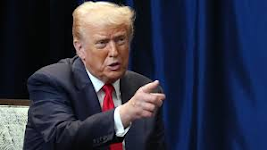

A highly sensitive rumor is circulating on social media and some news outlets: President Donald Trump has deployed a large military force to Nigeria. This claim is often accompanied by shocking photos of large-scale, unilateral U.S. military incursions to address domestic security concerns.
Let’s be clear: this statement is false. The United States has yet to launch a military invasion or send combat troops to Nigeria.
While the situation is far more nuanced than a simple yes or no, it involves high-stakes diplomacy and strategic military planning.
1. Sources of panic: threats and identification
The rumors started after President Donald Trump made strong statements about the violence and persecution of Christians in Nigeria.
-
threaten: Trump publicly designated Nigeria as a “country of particular concern” and explicitly threatened that the United States “may” take military action or even intervene. “Gunshots are everywhere” If the alleged assault does not stop.
-
Planning reality: These threats have led to the development of practical plans within the US Department of Defense (Pentagon) to explore intervention options, including targeted strikes and sanctions. However, this planning does not equal actual deployment. The Nigerian government strongly opposes the characterization of religious persecution as a “gross distortion of reality.”
2. Current reality: Cooperation not fighting
Despite the inflammatory rhetoric, the actual security relationship between the United States and Nigeria has evolved in the following directions: Collaboration and partnershipsrather than confrontation.
-
Joint Working Group (UNJWG): The most important development was the establishment of United States-Nigeria Joint Working Group (UNJWG) About safety.
The official body was established after a high-level meeting between the Nigerian delegation, led by the National Security Adviser, and US officials. -
Key support: The task of this joint group is to Deepen security cooperation, enhance intelligence sharing, and expedite the processing of defense equipment requests.
In short, the United States is providing Support, training and professional assets Help the Nigerian military fight insurgent groups such as Boko Haram, but it is still Nigerians who do the actual work. -
American footprints: The United States has long been a strategic partner, providing more than $1.58 billion in security assistance since 1999, including the sale of A-29 Super Tucano aircraft and intelligence support.
There may be covert intelligence, surveillance and reconnaissance (ISR) flights to assist the Nigerian military, but this is far from a full-scale invasion.
🛑 Conclusion: Check the source rather than panic
Claims that US fighter jets or heavy military equipment have arrived in Port Harcourt or any other Nigerian city for an invasion are Unverified and widely debunked by fact-checkers.
The narrative is clear: Nigeria’s government insists on respecting its sovereignty while welcoming significant intelligence and technical assistance. The United States is currently acting as partnernot an intruder.
What are the main takeaways? Don’t believe shocking social media posts. The U.S. presence will focus on providing security assistance and coordination through new joint working groups.
