

Intelligent Transportation System (ITS) refers to the integration of advanced technologies and services to improve the safety, efficiency and sustainability of transportation systems.
It covers a wide range of technologies and applications such as connected vehicles, advanced traffic management systems, intelligent transportation systems and other innovative services to optimize transportation networks.
Its purpose is to provide users with real-time, relevant information to make informed decisions and optimize the entire transportation system to reduce congestion, improve security and improve mobility.
A brief history of intelligent transportation systems
The concept of Intelligent Transportation Systems (ITS) dates back to the 1980s, when the U.S. Department of Transportation began exploring the use of advanced technologies to improve the efficiency and safety of transportation systems.
Over the years, its evolution has evolved to cover a wide range of technologies and services, including traffic management systems, connected vehicles, public transportation systems, and more.
In the 1990s, with the introduction of Global Positioning Systems (GPS) and the advancement of digital communication technology, its power gained momentum, thus real-time monitoring and control of transportation systems.
In 1994, the first time of the World Congress was held, bringing together experts from all over the world to share ideas and explore their potential.
Since then, its development has played a key role in its growth as new technologies such as artificial intelligence and the Internet of Things (IoT).
Also read: A comprehensive guide on auto insurance
Today, it is regarded as a key component of smart cities and sustainable transport systems and is being implemented in cities and regions around the world.
Benefits of smart transportation systems
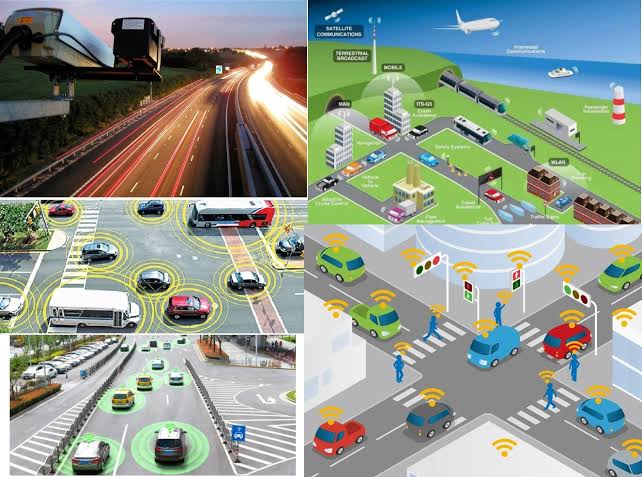
Intelligent Transportation Systems (ITS) provide many benefits to transport systems and their users, including:
(1) Improve safety
Its technology, such as collision avoidance systems and connected vehicles, can help reduce the number of accidents on the road, making all users safer.
(2) Traffic congestion
Its solutions, such as real-time traffic management systems and dynamic routing, can help reduce congestion by optimizing traffic flow, reducing travel time and improving road utilization.
(3) Improve efficiency
Its services, such as e-pass collection and e-ticketing, can help reduce the time and costs associated with transportation, making users more efficient.
(4) Better information
Its technologies, such as traveler information systems and public transportation systems, can provide users with real-time, relevant information to make informed decisions about their transportation choices.
(5) Enhanced sustainability
Its solutions, such as electric vehicle charging and car sharing programs, can promote more sustainable transportation practices, reduce emissions and improve air quality.
(6) Mobility increases
Its services, such as the Deputy Candid and Active Transportation System, can improve mobility for people with disabilities and older adults and provide alternative transportation methods for all users.
Overall, it can help make transportation safer, more efficient and more sustainable, while also providing users with real-time information and enhanced mobility options.
How intelligent transportation systems revolutionize the future
Intelligent Transportation Systems (ITS) have the potential to revolutionize the future of transportation in a number of ways:
(1) Intelligent mobility
Its technology, such as connectivity and self-driving cars, can help all users be safer, more efficient and easier to use, creating a smart mobile system that integrates multiple modes of transportation.
(2) Improve traffic management
Its solutions, such as advanced traffic management systems and dynamic routes, can help reduce congestion, optimize traffic flows and improve road utilization, making transportation more efficient and reliable.
(3) Better environmental performance
Its technologies, such as electric vehicle charging and car-sharing programs, can promote more sustainable transportation practices, reduce emissions and improve air quality.
(4) Improve public transportation tools
Its services, such as real-time traveler information and e-ticketing, can increase the efficiency and accessibility of public transportation, making it a more attractive option for users.
Also read: A comprehensive guide on auto insurance
(5) Improve connectivity
Its technologies, such as the Internet of Things (IoT) and 5G connectivity, can create a more connected and integrated transportation network that provides users with real-time, relevant information to make informed decisions.
In short, it has the potential to revolutionize the future of transportation by creating smarter, more efficient and more sustainable transportation systems, thus better meeting users’ needs.
Disadvantages of intelligent transportation systems
Although Intelligent Transportation Systems (ITS) offer many benefits, there are several disadvantages, including:
(1) Fees
Implementing its technology and services can be expensive and requires substantial investment in infrastructure, technology and staffing.
(2) Technical Complexity
Its systems can become complex and challenging, requiring dedicated expertise and knowledge to design, develop and maintain.
(3) Privacy Issues
The use of its technology, such as connected vehicles and real-time monitoring systems, may cause privacy concerns, and users are concerned about collecting, using and protecting their personal data.
(4) Interoperability Challenge
Its systems may not always work seamlessly, resulting in interoperability and data exchange problems between different systems and technologies.
(5) Infrastructure Challenges
To fully realize its interests, substantial investments in transportation infrastructure may be required, including upgrading roads, bridges and other transportation assets.
(6) User acceptance
Some users may resist the use of their technology and services due to privacy concerns, unfamiliarity with new technologies or favor traditional transportation methods.
While it offers many potential benefits, challenges related to its implementation must be carefully considered and addressed to ensure its success and widespread adoption.
In short, Intelligent Transportation Systems (ITS) is a rapidly growing field covering a wide range of technologies and services designed to improve the safety, efficiency and sustainability of transportation systems.
It has the potential to provide numerous benefits including reduced congestion, increased efficiency, better information and enhanced liquidity.
However, it is also related to IT challenges, including costs, technical complexity, privacy issues, interoperability challenges, infrastructure challenges and user acceptance.
To fully realize its potential, these challenges must be carefully considered and addressed. Despite these challenges, its benefits are likely to make it a key component of smart cities and sustainable transportation systems.
Also read: The Final Guide to Understanding Dental Insurance
