
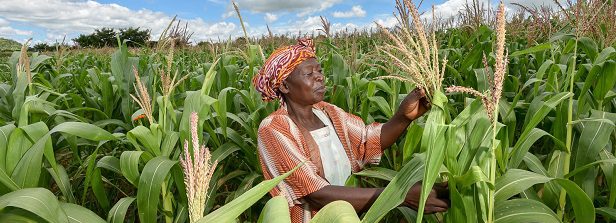
Collective agriculture is a system in which farmers work together on shared land to produce crops or livestock. The system has the potential to contribute to sustainable food systems in a variety of ways, including promoting resource sharing, reducing waste and increasing efficiency.
In this article, we will explore the concept of collective agriculture in more detail, including its history, interests and challenges. We will also look at examples of successful collective agriculture programs from around the world and discuss strategies to promote and support collective agriculture as part of a broader effort to build a more sustainable and equitable food system.
The benefits of collective agriculture for sustainable food systems
Collective agriculture has the potential to provide many benefits to sustainable food systems, including:
(1) Environmental welfare
Collective agriculture can help reduce greenhouse gas emissions by promoting resource sharing and reducing waste. For example, by sharing equipment and transporting resources, farmers can reduce their carbon footprint.
Also read: Far from the impacts and consequences of global warming
In addition, collective agriculture can promote sustainable agricultural habits such as crop rotation, cover crops and natural pest management, thereby improving soil health and reducing the need for synthetic pesticides and fertilizers.
(2) Economic interests
Collective agriculture can provide farmers with access to shared resources and knowledge, such as tools, equipment and training, which can help increase efficiency and reduce costs. Furthermore, through joint efforts, farmers can improve their market access and bargaining power, resulting in higher prices and higher financial stability.
(3) Social interests
Collective agriculture can help build communities and promote common decision-making. By working together on shared land, farmers can build strong relationships with each other and collaborate in important decisions related to farm management. In addition, collective agriculture can help increase opportunities for healthy food by promoting the production of fresh local produce.
Overall, collective agriculture can play an important role in creating a more sustainable and equitable food system by promoting resource sharing, reducing waste and increasing efficiency. In addition, collective agriculture can help build communities and promote common decision-making, resulting in a more resilient and equitable food system.
Challenges and solutions for collective agriculture
Despite the potential benefits of collective agriculture, there are challenges that may make it difficult to establish and maintain successful collective agriculture programs. Some of these challenges include:
- Access to land and financing: Many small farmers face challenges in accessing land and financing, which can make it difficult to establish collective agricultural programs. Land can be expensive or unavailable and can be difficult to obtain financing due to a lack of mortgage or credit history.
- Labor Management: Managing labor can be a challenge for collective agriculture because it requires coordination of timetables, tasks and expectations for multiple people.
- Decision-making process: Decision-making can be a challenge in collective agriculture because it requires a balance between individual needs and group needs.
Also read: How to make money from kitchen waste
To overcome these challenges, there are several potential solutions:
- Policy and Institutional Support: Governments and other agencies can support collective agricultural programs through policies and programs that provide land and financing. This support can take the form of grants, loans or other forms of financial aid, as well as a legal framework for protecting land rights.
- Community Organization: Community can organize around collective agricultural programs, bringing together their resources and knowledge to build and maintain successful programs. This may involve networking and partnerships with other community organizations and institutions and using social media and other digital tools to connect with like-minded people.
- Technology adoption: Technology can play an important role by providing tools and platforms for resource sharing, labor management and decision-making to support collective agriculture. For example, digital platforms can be used to coordinate timetables and tasks, while precise agricultural tools can be used to optimize crop yields and reduce waste.
Examples of successful collective agricultural models
Several successful collective agricultural models around the world have positively impacted local food systems. Here are some examples:
(1) Community-supported Agriculture (CSA)
CSA is a model where consumers buy stocks harvested on the farm in advance, providing farmers with a stable source of income and providing consumers with a reliable source of fresh, locally grown agricultural products.
CSA usually involves a group of consumers who have partnerships with local farmers to share the risks and rewards of agriculture. The model has been successful in many parts of the world, including the United States, Japan and Europe.
(2) Workers-owned cooperative
Workers-owned cooperatives are businesses owned and operated by their employees. In agriculture, this model can take the form of a group of farmers who gather their resources to build cooperative farms.
This model has been successful in many parts of the world, including Brazil, where MST (Land-Free Workers Movement) has established successful worker-owned cooperatives on land recovered by large landowners.
(3) Land Trust
A land trust is an organization that holds land for the benefit of the community. In agriculture, land trusts can be used to protect farmland from development and ensure that they are still in agriculture.
This model has been successful in many parts of the world, including the United States, with the American Farmland Trust protecting over 6.5 million acres of farmland.
Several successful collective agricultural projects around the world have had a positive impact on local food systems. Here are some case studies:
- Farm in Tennessee, USA: This farm is a Tennessee community that was established as a collective agricultural project in the 1970s. Today, the community has become more than 200 people living and working together on a 1,750-acre farm. The farm produces a variety of organic crops, including vegetables, fruits and grains, and has become a model for sustainable living and agriculture.
- Via Campesina, Los Angeles, Global: La Via Campesina is an international campaign that includes small farmers and rural workers that promotes food sovereignty and agroecology. Founded in 1993, the movement currently represents more than 200 million farmers from more than 80 countries. La Via Campesina has successfully promoted small agriculture and resisted the expansion of industrial agriculture and food systems controls.
- The only food street farm in Vancouver, Canada: The only food street farm is a worker-owned cooperative that runs several urban farms in Vancouver, Canada. The cooperative employs more than 30 people experiencing poverty, addiction and other challenges. The farm produces a variety of fruits and vegetables, which are sold to local restaurants and markets. The program has positively impacted the community by providing jobs and increasing access to fresh and healthy food.
Also Read: 5 Surprising Health Benefits of Rebel Drinks You Need to Know
