
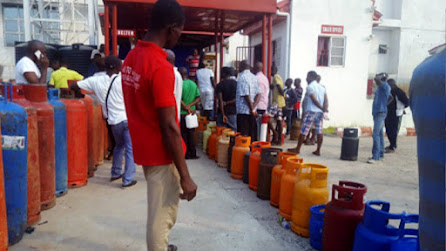

Nigerians have been hit hard by the soaring cost of Liquefied Petroleum Gas (LPG), also known as cooking gas, in recent days. In major cities such as Lagos, Abuja and Port Harcourt, prices have soared to between £2,500 and £3,600 per kilogram, meaning it now costs up to £26,000 to fill a 12.5kg cylinder.
The increase gives many families yet another reason to be frustrated. There were long queues at gas stations and corner shops, not for gas, but for cooking! Many households are now turning to charcoal, kerosene, and even firewood as alternatives.
So what is driving the sudden spike in natural gas prices and scarcity?
Why cooking gas is currently scarce and expensive in Nigeria
1. PENGASSAN strike disrupts supply chain
The biggest trigger for the price surge is the recent strike action by the Petroleum and Gas Senior Staff Association of Nigeria (PENGASSAN). The strike, which began with the layoff of Nigerian workers at the Dangote refinery, disrupted the loading and distribution of LPG across the country for several days.
NNPC group chief executive Bayo Ojulari said this had created bottlenecks in supply lines, leading to “artificial shortages”. Even after the strike was suspended on October 1 following government intervention, supply and distribution took time to fully normalize, leading to temporary price spikes across the country. Ojulari explained:
“The increase you’re seeing is relatively artificial because during the strike, shipping and loading were delayed by about two to three days. As things return to normal, it will take a while for distribution to catch up again.”
2. Opportunistic retailers take advantage of crisis
While supply disruptions played a role, market opportunism made the situation worse. According to reports, some retailers and middlemen are deliberately raising prices to profit from public panic. Ojulari criticized the practice, saying many dealers with existing reserves had increased their prices during the shortage rather than selling at standard prices. He said:
“As you know, in Nigeria, people jumped at the opportunity. As time went on, some people with existing reserves decided to increase prices.”
3. Local refinery maintenance and distribution delays
Industry sources including the Nigeria Association of Liquefied Petroleum Gas Marketers (NALPGAM) confirmed that internal maintenance activities at the Dangote refinery also resulted in temporary disruptions.
Delays in ship berthing at Lagos terminals have slowed unloading and distribution, but other areas such as Port Harcourt have been less affected due to stable supplies from Nigeria Liquefied Natural Gas Limited (NLNG). These logistical issues are adding pressure to an already strained system, particularly in the southwest where demand is highest.
4. Poor supply chain flexibility
Experts point out that Nigeria’s domestic natural gas supply network remains fragile and vulnerable to strikes, maintenance shutdowns or weather disruptions. Although local production has improved, the country’s distribution infrastructure and warehousing capabilities remain inadequate.
Dr. Ayodele Oni, an expert in energy law, noted that despite higher upstream gas production, Nigeria continues to face recurring shortages and sudden price spikes, which are symptoms of systemic structural weakness in the gas market.
5. Panic buying and limited alternatives
As prices rise, panic buying begins. Many households are scrambling to refill their cylinders amid fears of further price increases, putting additional pressure on limited supplies. Long queues at gas plants are common in major cities, while smaller retailers sell at premium prices.
This shortage has forced some Nigerians to turn to unsafe cooking alternatives such as charcoal and firewood, which is harmful to their health.
Links you may like
(optional click)
1. If you need consultation or business negotiation, please contact me 08136125128 WhatsApp
wa.me/2348136125128
2. Visit my blog for more news:
www.edesonlinenews.com
3. I register my business name, limited liability company, NGO, social club, etc. with the Corporate Affairs Commission. I assist people in applying for international passports at the Nigeria Immigration Service. WhatsApp number; 08136125128.
4. I design websites, blogs, and graphics. I also teach website design in Ikotun Lagos State. I publish an app on Google PlayStore.
5. I sell premium WordPress themes/plugins, e-books, computer software and other digital products EdesonDigitalStore.com.ng
6. Learn more about my products and services on my company website:
www.edesoninfotech.com.ng
7. Connect with me on LinkedIn:
https://lnkd.in/gEC32Fin
8. Join my free website and make money
freelancer.edesoninfotech.com.ng
….
