
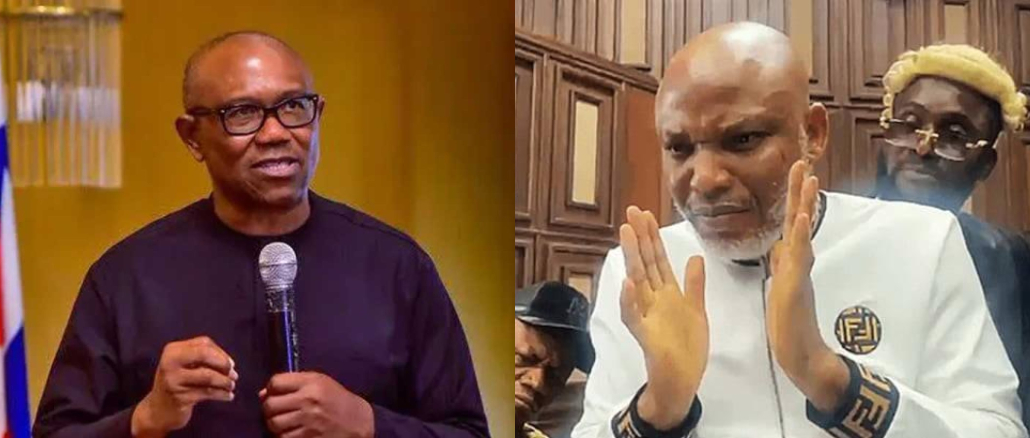
- Former Anambra State governor, Peter Obi, has expressed concern over rising tensions in Nigeria following the conviction of Nnamdi Kanu.
- Kanu is the leader of the banned Indigenous Peoples of Biafra Organization (IPOB).
- Obi shared his thoughts on his official X account after Kanu was sentenced by the Federal High Court in Abuja.
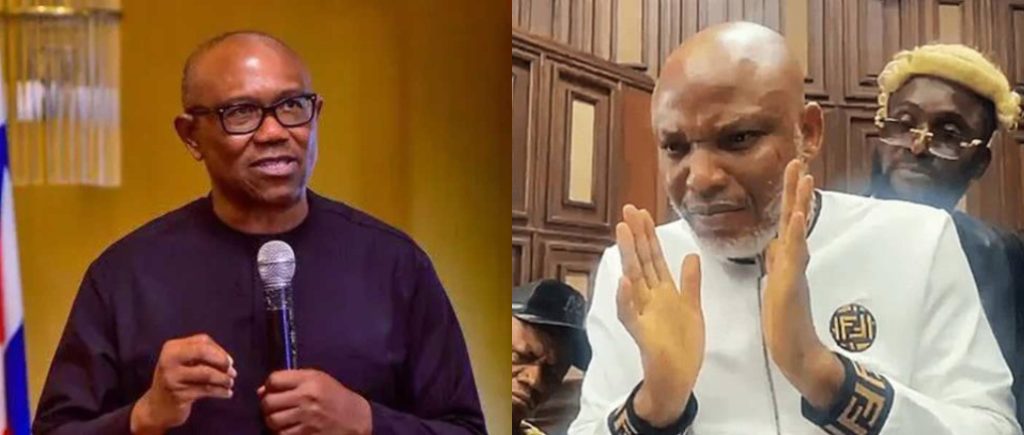
Peter Obi, the former governor of Anambra State and Labor Party’s 2023 presidential candidate, has expressed concern that the conviction of Nnamdi Kanu could escalate tensions across Nigeria.
Obi shared his views on his official
He believes the government’s approach fails to address underlying grievances and misses important opportunities for dialogue that could ease tensions. Obi said Kanu’s arrest, detention and conviction represented a lost opportunity to engage constructively with legitimate concerns.
Obi wrote:
“The news of Mazi Nnamdi Kanu’s conviction should give every concerned Nigerian pause and reflection. Our country is already grappling with the effects of economic hardship, insecurity and poor governance. Far from easing tensions, this development threatens to worsen them. I have always believed that Mazi Kanu should not have been arrested. His arrest, detention and conviction reflect a failure of leadership and a lack of understanding of the real issues of the day.”
He further stressed that Kanu’s grievances can be resolved through empathy, dialogue and prudent leadership. Obi warned that the government’s handling of the case has fueled distrust and caused unnecessary disruption at a time when citizens are facing economic challenges and insecurity.
Obi acknowledged that the law was in effect, but noted that effective leadership often involves more than the strict application of legal procedures. He stressed that when legal measures alone are insufficient to maintain peace and stability, governments often rely on negotiations, political solutions or amnesties to maintain peace and stability.
Obi urged the Presidential Palace, the Council of State and respected politicians to focus on reconciliation and inclusive governance, prioritizing dialogue and bridge over conflict and division.
Court conviction details
The Federal High Court in Abuja on Thursday found Kanu guilty of terrorism after he issued a “sit-in-at-home” order that disrupted schools, banks and businesses in the southeast region, especially on Monday. The court deemed these acts “acts of terror against Nigeria.”
Judge James Omotosho, who is presiding over the trial on felony treason and terrorism charges brought by the federal government, dismissed Kanu’s no-case submission. The judge ruled that evidence provided by the Department of State Services (DSS) required explanation, but Kanu refused to provide an explanation, leaving the court solely dependent on the prosecution’s evidence.
The government accuses Kanu of fomenting insurrection by making threats over the air, warning of consequences for those who violate stay-at-home orders. Prosecutors noted widespread closures of schools, banks, markets and gas stations on Monday. Kanu denies the allegations, which date back to a 2015 case that was reopened in 2025.
Judge Omotosho held that acts of terrorism are punishable by life imprisonment. In his ruling, the judge cited broadcasts in which Kanu allegedly threatened harm to the government and citizens, including members of his own community. Kanu is said to have referred to Nigeria as “the zoo” and the southeastern region as “Biafra” to show he was aware of his actions.
Kanu was convicted on multiple charges, including terrorism, directing stay-at-home orders that disrupted economic activity, leading a banned organization and inciting attacks on state institutions. He was sentenced to life in prison for terrorism offences, 20 years for a stay-at-home order and additional sentences for other crimes. The court also ordered Kanu to be placed in protective custody and restricted his use of digital devices except under the supervision of the Office of the National Security Adviser.
