
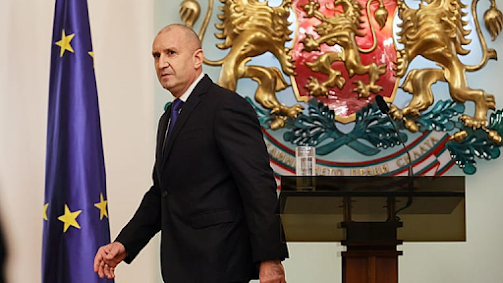

Bulgarian President Rumen Radev announced his resignation on Monday, paving the way for a new political plan two months before snap parliamentary elections in Bulgaria. The decision comes amid a long-running political crisis that has plunged the country into instability, falling voter turnout and widespread public distrust of institutions.
Radev said he would formally submit his resignation on Tuesday, marking the end of his nine-year term as president and confirming long-standing speculation that he intended to seek executive power as prime minister.
“Our democracy cannot survive if we hand it over to corrupt elements, dealmakers and extremists,” Radev said in a televised address, casting his resignation as a response to systemic political failure.
Radev’s resignation and Bulgaria’s political crisis
Bulgaria has faced years of political deadlock, with multiple elections failing to produce a stable parliamentary majority. As a parliamentary republic, real governing power rests with the parliament and the prime minister, while the presidency is largely ceremonial. However, as political paralysis deepened, Radev’s influence continued to expand.
Radev was appointed during his tenure seven caretaker governmentsan unprecedented number that highlights the inability of political parties to form lasting coalitions. Analysts said his resignation marked a decisive shift from a moderate role to direct political leadership.
Speculations about Radev running for parliament have been circulating for years. Monday’s announcement effectively confirmed his intention to compete for the prime ministership ahead of the upcoming election.
Questioning Bulgaria’s democratic direction
In his speech, Radev questioned why Bulgaria has achieved major achievements in Europe – such as joining the EU Schengen Area and Eurozone— failed to translate into political stability or public satisfaction.
“We are already members of Schengen and the euro zone,” he said. “The questions are why these achievements have not brought stability; why Bulgarians stopped voting; why they do not trust the justice system or the media; and why so many people in European Bulgaria feel poor or live in insecurity.”
He accuses what he describes as a “conveyor belt” model of governance, arguing that while it appears democratic on the surface, the way it operates is oligopoly structure Behind the scenes.
Massive protests and public outrage
Just a few weeks ago, when Bulgaria saw its The largest protests since the 1990s. The demonstrations were initially sparked by opposition to a draft state budget but quickly escalated into broader demands for political accountability and systemic change.
Protesters called on several prominent figures, including the former prime minister, to resign and quit politics. Boyko Borisov and influential legislators Delian Pejewskiwho was sanctioned U.S. Magnitsky Act Suspected of corruption.
The protests highlighted growing public anger over corruption, inequality and a lack of justice – issues that Radev has highlighted repeatedly during his tenure as president.
Foreign Policy Implications and Ukraine’s War Position
The emergence of a new party led by Radev could significantly reshape Bulgaria’s domestic politics and foreign policy. His position is war in ukraine The stark departure from Bulgaria’s previous government has drawn criticism from political opponents and some Western analysts, who label him “pro-Russian”.
Radev responded directly to the accusations, warning that political opportunism could endanger national unity and security.
“In the name of the political future, some politicians are putting the peaceful life of Bulgarians at risk in a dangerous war near our borders,” he said. “They even threaten the civil and ethnic peace, which we will maintain despite provocations.”
What’s next for Bulgaria?
With snap parliamentary elections approaching, Radev’s resignation introduces a powerful new variable into Bulgaria’s volatile political landscape. Supporters see him as a potentially unifying figure who can break the cycle of instability, while critics warn that his policies – particularly on foreign affairs – could change Bulgaria’s strategic direction.
With another election coming up in Bulgaria, Rumen Radev’s promotion from president to potential prime minister could prove to be one of the most important political developments in the country’s recent history.
