
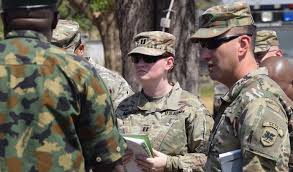
Rumors have been circulating since the Christmas air raids in Sokoto, but today, it was officially confirmed. this U.S. Africa Command (AFRICOM) It has been confirmed that a “squad” of US troops is currently operating in Nigeria.
This is more than just a headline; this is a seismic shift in Nigeria’s security landscape. For the first time in years, the “down to earth” conversation has shifted from whispered conspiracy theories on X (formerly Twitter) to confirmed realities in Washington and Abuja.
Announcement: What we know
At a press conference on Tuesday, General Dagvin AndersonThe head of AFRICOM revealed that the deployment follows high-level talks with the President tinubu ball and the U.S. government. While the exact number of personnel remains confidential, Anderson described the unit as a “small team” that brings “unique capabilities” to Nigeria’s counterterrorism efforts.
Minister of Defense of Nigeria, Christopher MoussaTheir existence was also confirmed, but he quickly kept the details of the operation “private.”
Background story: “bullet fire” doctrine
This move didn’t happen in a vacuum. It’s been a tumultuous few months in 2026:
-
Christmas strike: On December 25, 2025, the US military conducted a missile attack on ISIS targets in Sokoto.
-
pressure: President of the United States Donald Trump He has been outspoken about security issues in Nigeria and has previously threatened to send in the army to “shoot” if the massacre of Christians in the north was not stopped.
-
The repositioning of the Chinese Communist Party: Washington recently placed Nigeria back on its list of “countries of particular concern,” a move that typically precedes heavy diplomatic or military pressure.
The ‘Violence’ of NigeriaX: Sovereignty and Survival
As expected, Nigerian social media is currently a battleground of opinions.
-
Critics: Many called it a “serious violation of sovereignty.” senator Abdul Ningi Concern was recently expressed in the Senate that foreign military action on our soil without clear constitutional oversight would result in becoming a “vassal state.”
-
supporter: On the other hand, many Nigerians, exhausted by more than a decade of insurgency, welcomed the move. “If our people can’t do the job, let those who can help us do it,” one viral post read.
judgment
Whether you view this as a favor or an unnecessary intrusion, one thing is clear: Nigeria’s military relationship with the United States has entered a new, more aggressive phase. Heat is officially on as U.S. team likely focuses on advanced intelligence and surveillance with missions flying out of nearby Ghana Boko Haram and ISWAP.
Is this the beginning of the end of the insurgency, or is Nigeria becoming a pawn in a larger global power game?
